
Proof of work
Software built around real workflows.
One case study below. More are in progress as we finish work we can show without exposing client data.
The problem
From phone-tag intake to a self-service workflow portal.
A property-services business was booking site visits through phone calls and emails. Details were often missing, the office went back and forth with the customer, and engineers showed up underprepared.
The intake
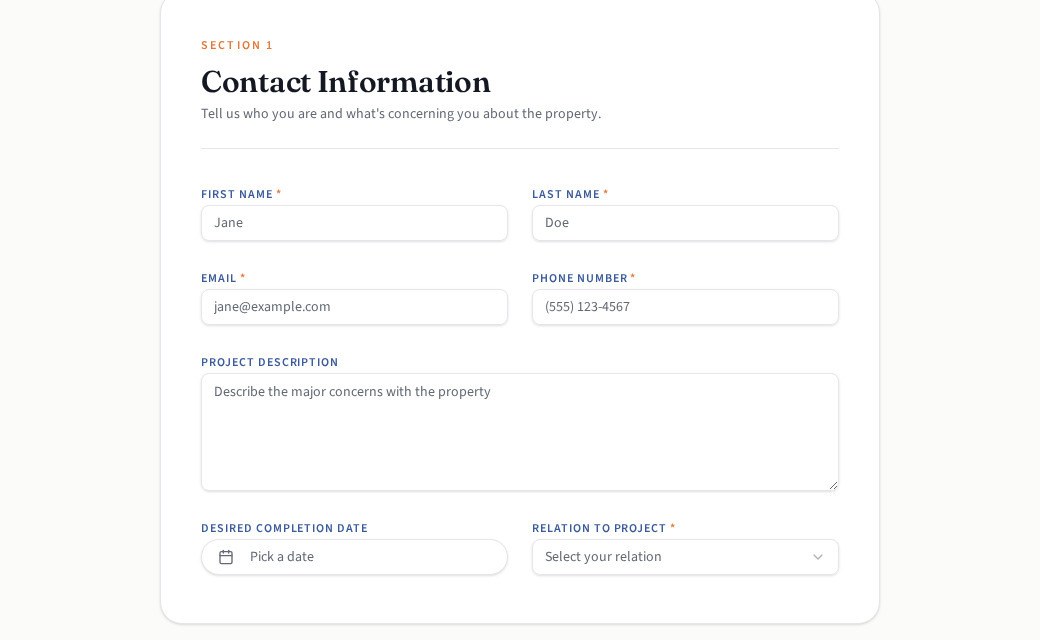
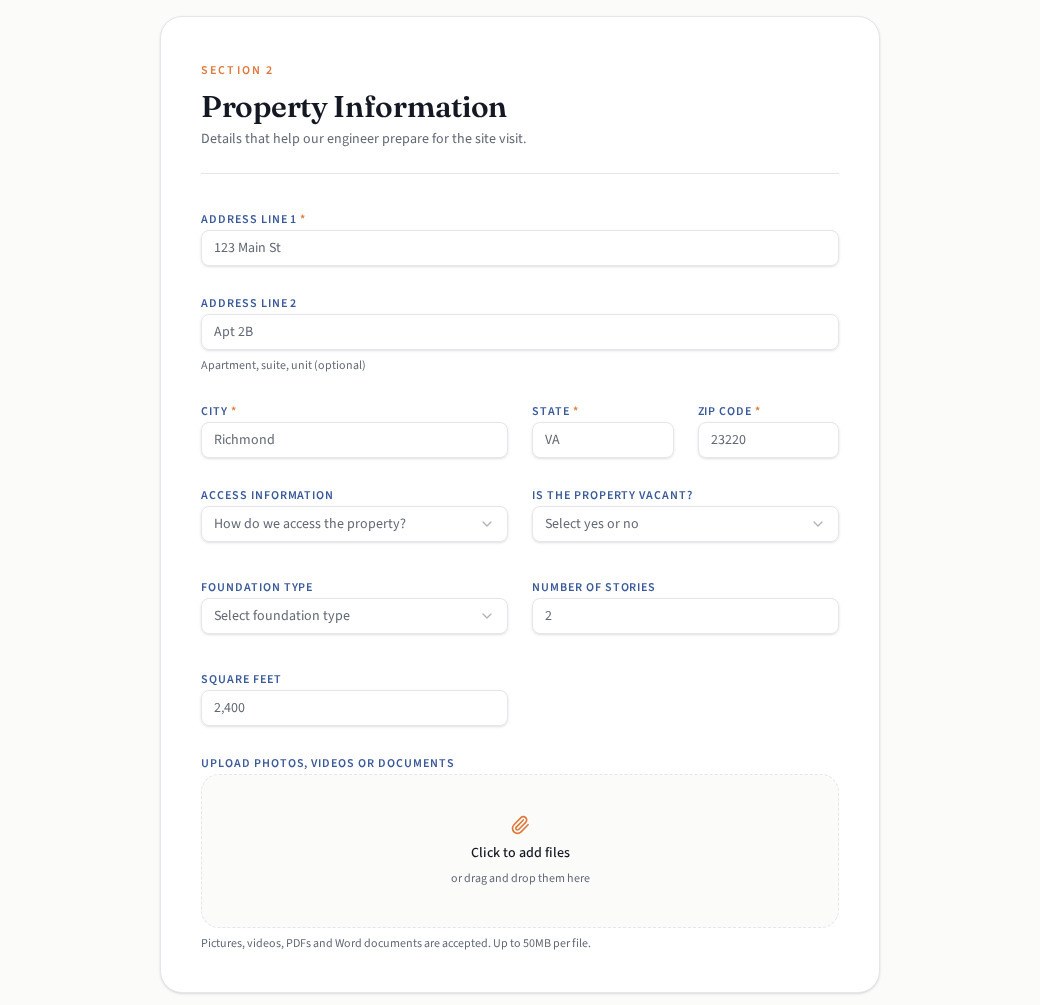
A structured two-section public form.
Customers describe the project in section one, then give the office everything an engineer needs in section two — before anyone picks up the phone.
The back office
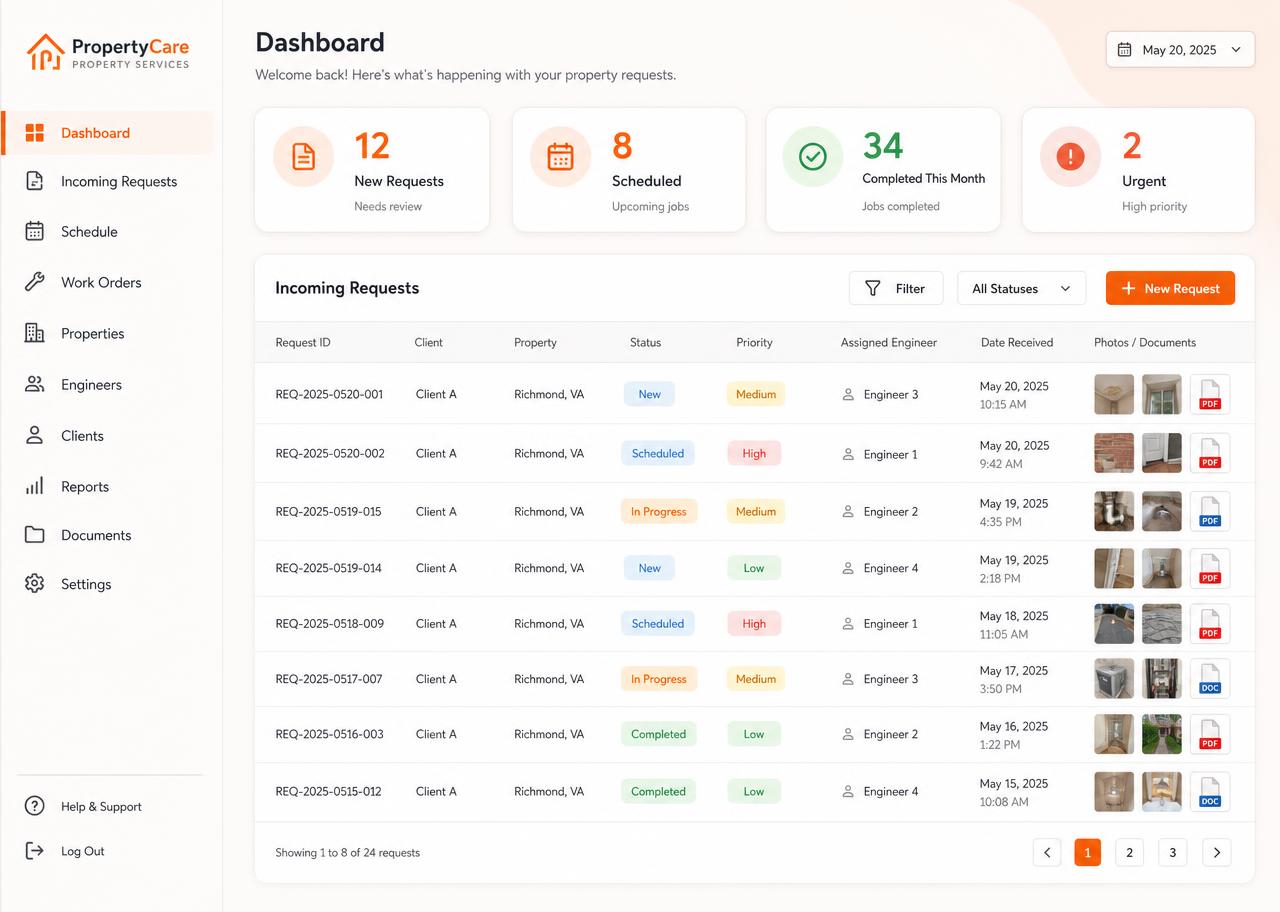
Every request lands in one dashboard.
Submissions flow straight into a workflow portal where the team triages requests, assigns engineers and tracks status — no inbox digging.
- Structured intake replaces back-and-forth emails
- Photos and documents attached up front
- Status tracking in one dashboard
- Workflow portal the team actually uses
Client name and identifying details are withheld. More case studies are in progress.
More case studies coming soon
We're documenting additional builds — workflow portals, AI-assisted tools, and rebuilt customer-facing sites — as each client gives us permission to share.
Request an estimate